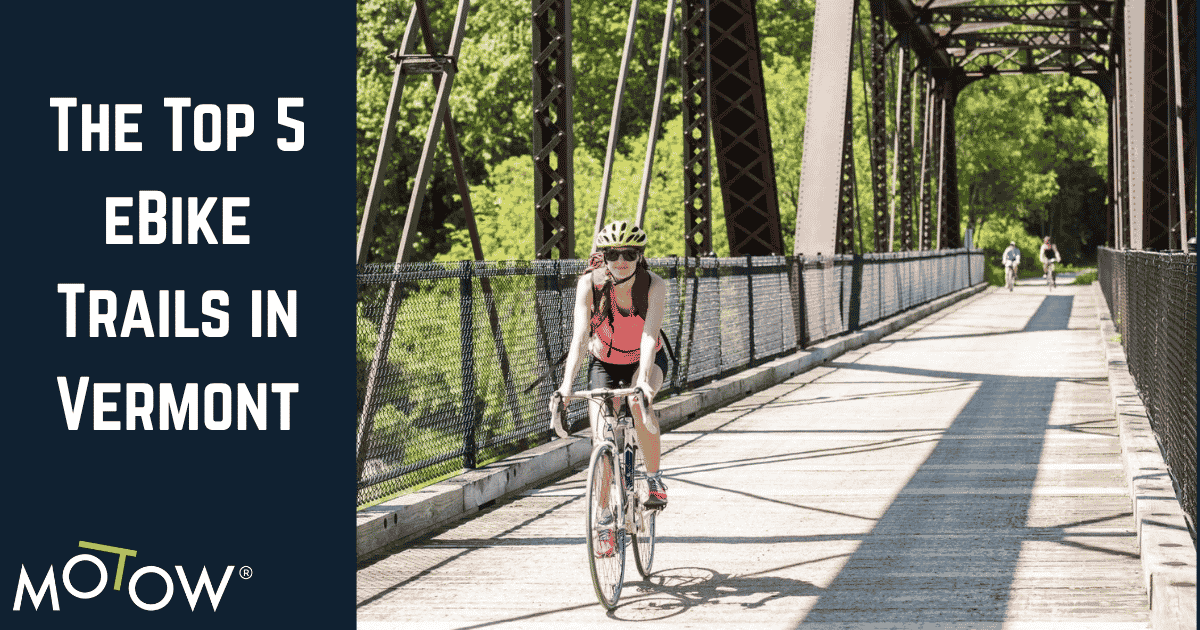
Biking the Green Mountain State: Top 5 eBike Trails in Vermont
The top 5 eBike Trails in Vermont are some of the most naturally rewarding states in the Northeast for riders who want to combine scenery with challenge. From the rolling farmland of the Champlain Valley to the rugged peaks of the Green Mountains, the state offers a dense network of trails that feel purpose-built for exploration. Whether you’re chasing foliage in the fall or carving through forest singletrack in the summer, Vermont consistently ranks among the best eBike trails in the country – a key reason it’s become a go-to destination for riders looking for immersive, backcountry-style experiences.
Top 5 eBike Trails in Vermont
1. Kingdom Trails
One of the most iconic routes is the Kingdom Trails, located in East Burke. This expansive trail system offers over 100 miles of interconnected terrain, ranging from smooth flow trails to technical climbs. It’s widely considered one of the best eBike trails in Vermont because of its thoughtful design and variety. Expect packed dirt, roots, and elevation changes – Class 1 eBikes are permitted on designated trails, so check local signage before heading out.
2. Stowe Recreation Path
Another standout is the Stowe Recreation Path, a more relaxed but equally scenic ride. Stretching over 5 miles, this paved path winds through meadows with constant views of Mount Mansfield. It’s ideal for riders looking for a smoother experience or a recovery day between more technical routes. While it’s not rugged, it still earns a place among the top eBike trails in Vermont thanks to its accessibility and views.
3. Killington Mountain Bike Park
For riders who want elevation and solitude, the Killington Mountain Bike Park delivers. Known primarily for downhill riding, it also accommodates eBike riders on certain uphill routes. Terrain here is steep, rocky, and demanding – best suited for experienced riders. This is where eBike power really pays off, helping you manage sustained climbs and maximize downhill runs.
4. Lamoille Valley Rail Trail
The Lamoille Valley Rail Trail offers a completely different experience. Spanning over 90 miles across northern Vermont, this crushed gravel trail is perfect for long-distance cruising. It’s one of the most accessible eBike trails in Vermont, with minimal elevation gain and wide paths that make it ideal for endurance rides or multi-day trips. Be prepared for variable surface conditions depending on weather.
5. Pine Hill Park
Finally, the Pine Hill Park in Rutland is a hidden gem. With a mix of technical singletrack, wooden features, and fast descents, it’s a compact but challenging system. The terrain can be root-heavy and tight, so precise handling is key. It’s a favorite among locals and deserves recognition as one of the more technical best eBike trails in Vermont.
Vermont eBike Laws: What Riders Need to Know
When it comes to regulations, Vermont follows a relatively straightforward framework. eBikes are generally categorized into the standard three classes. Class 1 and Class 2 eBikes are typically allowed on bike paths and many multi-use trails, while Class 3 eBikes are more restricted and often limited to road use. Trail access is usually determined at the local or land-manager level, meaning systems like Kingdom Trails or Killington may have their own specific rules. Helmets are recommended, and it’s critical to respect posted signage, as Vermont places a strong emphasis on land stewardship and trail preservation.
To get your eBike to these remote trailheads reliably, having the right transport setup matters. The MoTow Double eBike Carrier is designed specifically for heavier electric bikes, with a stainless steel construction that resists corrosion from road salt and harsh weather – especially relevant in a state like Vermont. Its dual-bike capacity and secure mounting system make it ideal for riders heading deep into the mountains or traveling between trail systems. If you’re comparing materials and durability, check out our guide to why stainless steel outperforms traditional alternatives in long-term outdoor use.